
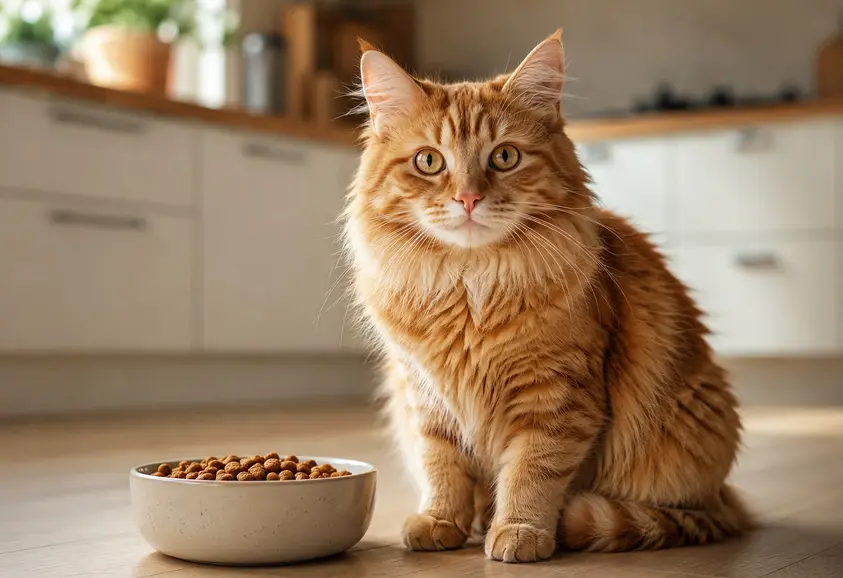

A healthy cat isn’t defined by a number on a weighing scale. Ideal weight varies depending on your cat’s breed, age, body size, activity level, and overall health. Instead of focusing only on weight, it’s important to look at your cat’s body condition.
A healthy cat should have ribs that can be felt beneath a light layer of fat, a visible waist when viewed from above, and a gentle abdominal tuck when viewed from the side.
How to Tell If Your Cat Is Overweight
Your cat may be carrying excess weight if:
- You struggle to feel their ribs.
- Their waist is difficult to see from above.
- Their abdomen appears rounded.
- They have noticeable fat deposits around the belly.
- They are less active or reluctant to jump and play.
- They have difficulty grooming certain areas of their body.
Regularly checking your cat’s body condition can help you identify weight gain early.
Why Do Cats Become Overweight?
Weight gain usually occurs when a cat consistently consumes more calories than it uses. Common contributors include:
- Overfeeding or oversized portions
- Free feeding throughout the day
- Too many treats
- Lack of physical activity
- Feeding calorie-dense foods without adjusting portions
- Changes in age, lifestyle, or activity level
Indoor cats can be particularly prone to weight gain when they have limited opportunities for exercise.
How to Help an Overweight Cat Lose Weight
If your cat is overweight, focus on gradual and controlled weight management.
Measure their food
Avoid guessing portions. Measure your cat’s daily food allowance and follow the feeding guidance provided for their food.
Control treats
Treats should make up only a small part of your cat’s daily calorie intake. Remember that treats count toward their overall calories.
Encourage play
Interactive play can help your cat stay active. Use toys, scratching posts, climbing structures, and short play sessions throughout the day to encourage movement.
Choose appropriate nutrition
Feed a complete and balanced cat food suited to your cat’s life stage and nutritional needs. With Purr-fect, you can provide your cat with nutritious meals as part of a balanced feeding routine.
If your cat needs significant weight loss, consult your veterinarian for an appropriate feeding and weight-management plan.
What If Your Cat Is Too Skinny?
Being underweight can also be a concern. Signs may include:
- Ribs, spine, or pelvic bones that are very prominent
- Very little fat covering the ribs
- Noticeable muscle loss
- Low energy
- Poor coat condition
- Unexplained weight loss
A cat that is losing weight unexpectedly should be checked by a veterinarian. Weight loss can sometimes be linked to dental problems, parasites, digestive disorders, diabetes, thyroid disease, or other health conditions.
Helping an Underweight Cat Gain Weight
Don’t simply give an underweight cat unlimited food.
First, determine why your cat is losing weight. Once underlying health problems have been ruled out, you can work with your veterinarian to develop a suitable feeding plan.
Helpful strategies may include:
- Feeding smaller, more frequent meals
- Offering nutritious, complete and balanced cat food
- Choosing foods your cat finds appealing
- Combining wet and dry food where appropriate
- Providing a quiet, comfortable feeding environment
- Monitoring weight regularly
The goal is healthy weight gain, not simply adding excess body fat.
How Much Should Your Cat Eat?
There is no universal portion size for every cat. Your cat’s ideal amount depends on their:
- Age
- Weight
- Body condition
- Activity level
- Lifestyle
- Health
- Type of food being fed
Food packaging provides useful feeding guidance, but portions may need to be adjusted according to your cat’s individual needs.
Keep Your Cat at a Healthy Weight
Maintaining a healthy weight is one of the simplest ways to support your cat’s long-term wellbeing.
Measure meals. Control treats. Encourage daily play. Provide nutritious food. Monitor body condition.
And if your cat experiences unexplained weight gain, weight loss, or a significant change in appetite, speak to your veterinarian.
At Purr-fect, we believe that good nutrition is at the heart of a healthier, happier cat.
Feed well. Play often. Love endlessly. Keep your cat Purr-fect.